One week ago some partners and I made a project about witch hunt in the 15th and 16th century. I found it very interesting so I decided to upload it. I hope you like it!
https://docs.google.com/presentation/d/1A60H7sSEsUug9IyNYltwrbdgDov2R33YU1Zjo6-ecRk/edit#slide=id.p
Monday, 18 March 2019

GRAMMAR
-Conditional sentences-
- ZERO: If + present.../present
If you like music, you should go to a concert.
- FIRST: If + present/future
If it rains, I won´t go to the park.
- SECOND: If + past simple/would +infinitive
If I studied, I would pass the exams.
- THIRD: If + past perfect/would have + past participle
If you had studied, you would have passed the exam.
UNITS 3 AND 4
VOCABULARY
Research: investigation.
Tile: A piece of floor made from ceramic.
Calm down: to become more relaxed.
Cheer up: to become happier.
Slow down: to do something less fast.
Open up to: To talk about the way you feel.
To run around: To be very busy.
To be stressed out: To be worried and nervous.
Research: investigation.
| RESEARCH |
Tile: A piece of floor made from ceramic.
| TILE |
Calm down: to become more relaxed.
Cheer up: to become happier.
Slow down: to do something less fast.
Open up to: To talk about the way you feel.
To run around: To be very busy.
To be stressed out: To be worried and nervous.
Thursday, 28 February 2019
AEROBIC AND ANAEROBIC ENERGY
Every movement we make requires energy to be created and there are two main ways that this is done, one with oxygen and another without oxygen.
The aerobic energy system
It requires oxygen, which resynthesizes ATP to create the energy required. It is used in lower intensity exercise and provides the energy for most human activity during our lives it is also important in the recovery from exercise of all intensities.

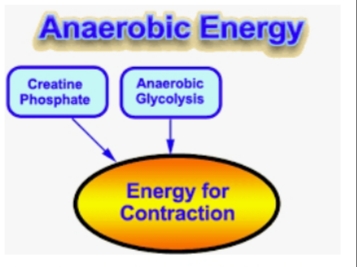
Anaerobic exercise
It is a physical exercise intense enough to cause lactate (lactic acid). to form. It is used by athletes in non-endurance sports to promote strength, speed and power and by body builders to build muscle mass. Muscle energy systems trained using anaerobic exercise develop differently compared to aerobic exercise, leading to greater performance in short duration, high intensity activities, which last from mere seconds to up to about 2 minutes. Any activity lasting longer than about two minutes has a large aerobic metabolic component.

What is the difference between aerobic and anaerobic exercise?
In the simplest terms the difference comes down to the oxygen. With aerobic exercise oxygen is carried through your breath to the muscles giving them the energy needed to sustain the effort. Oxygen is not present with anaerobic exercise.
The aerobic energy system
It requires oxygen, which resynthesizes ATP to create the energy required. It is used in lower intensity exercise and provides the energy for most human activity during our lives it is also important in the recovery from exercise of all intensities.

Anaerobic exercise
It is a physical exercise intense enough to cause lactate (lactic acid). to form. It is used by athletes in non-endurance sports to promote strength, speed and power and by body builders to build muscle mass. Muscle energy systems trained using anaerobic exercise develop differently compared to aerobic exercise, leading to greater performance in short duration, high intensity activities, which last from mere seconds to up to about 2 minutes. Any activity lasting longer than about two minutes has a large aerobic metabolic component.
What is the difference between aerobic and anaerobic exercise?
In the simplest terms the difference comes down to the oxygen. With aerobic exercise oxygen is carried through your breath to the muscles giving them the energy needed to sustain the effort. Oxygen is not present with anaerobic exercise.
Sunday, 25 November 2018
PHYSICAL CONDITION
Task 1
1. What is the FNP? Explain all its phases and give an example for the quadriceps and another for hamstrings.
A Family Nurse Practitioner (FNP) is a nurse with specialized educational and clinical training in family pratice. FNPs work with patients on mantaining health and wellness over the long term with a particular focus on preventative care.
QUADRICEPS
 The person you are helping to do it must be against the wall and you must push him with your arm, so he doesn't take off. Then you have to take his leg and bring his foot up to his bottom part. After this, maintain the position for 20 seconds, then make him/her contract for 8 seconds, rest for 5 and finally do it other 20 seconds. This exercise can also be done on the floor.
HAMSTRING

The patient has to be sat down on the floor with the feet against the wall. Next thing you have to do is push him/her in the back until he/she tells you that it hurts. This exercise has to be maintained for 20 seconds, then 8 seconds of contraction, 5 seconds of rest and another 20 seconds of exercise (this way you can know how much yo have improved).
2. Explain the General Syndrome of adaptation and all its phases. Give an example.
Hans Selye described three predictable stages the body uses to respond to stressors called gerenal adaptation syndrome (G.A.S.)
-Stages:
 1. ALARM STAGE: provides a burst of energy. The body responds to the anguish signal sent to the hypothalamus with a burst of energy. Your body can react to the danger with a fight or fight response. Example: If you are walking at night and something jumps out from behind a tree you are frightened and you can choose between fight or flight (escape).

2. RESISTANCE STAGE: the body attempts to resist or adapt to the stressor. After the stressful situation you body begins to repair itself and you heart rate and blood pressure begin to normalize. However, it remains on high alert for a while. Example: frustration, irritability and poor concentration.

3. EXHAUSTION STAGE: energy is exhausted. This stage is the result of prolonged stress. Fighting with stress for long periods can exhaust your physical, emotional and mental resources to the point where your body no longer has strength to fight stress. Example: fatigue, depression and anxiety.
3. Explain the Threshold Law by Arnold Schult. Illustrate with an example.
 -The Threshold law tells 2 things:
1. Limitation if passed has different state of affairs existing.
2. Maximum or minimum value serving as a reference point to compare and guide any breach that can cause a review of a situation or redesigning the system.
4. What is the training load and what are its components? Explain them and give an example of each component.
The training load is a textual feedback on the strenuousness of a single training session. Training load calculation is based on the consumption of critical energy sources during exercise ( carbohydrates and proteins).
- Components: volume and intensity. Thse must be increased to cause progressive adaptation.
VOLUME: you can increase it adding more weight, doing more repetitions, doing more exercises or exercising more often.
INTENSITY: you can increase it drecreasing you rest period or using specific intensity techniques.
5. Explain the principles of training according to the classification of Oliver (1985) and Zintl (1991).
- Principles related to the stimulation of physical conditioning.
- Principles related to the systems to which said stimulus is directed.
- Principles related to the response to said stimulus.
- Those who initiate the adaptation.
- Those that guarantee adaptation.
- Those who exercise a specific control of adaptation.

The patient has to be sat down on the floor with the feet against the wall. Next thing you have to do is push him/her in the back until he/she tells you that it hurts. This exercise has to be maintained for 20 seconds, then 8 seconds of contraction, 5 seconds of rest and another 20 seconds of exercise (this way you can know how much yo have improved).
2. Explain the General Syndrome of adaptation and all its phases. Give an example.
Hans Selye described three predictable stages the body uses to respond to stressors called gerenal adaptation syndrome (G.A.S.)
-Stages:
 1. ALARM STAGE: provides a burst of energy. The body responds to the anguish signal sent to the hypothalamus with a burst of energy. Your body can react to the danger with a fight or fight response. Example: If you are walking at night and something jumps out from behind a tree you are frightened and you can choose between fight or flight (escape).
2. RESISTANCE STAGE: the body attempts to resist or adapt to the stressor. After the stressful situation you body begins to repair itself and you heart rate and blood pressure begin to normalize. However, it remains on high alert for a while. Example: frustration, irritability and poor concentration.

3. Explain the Threshold Law by Arnold Schult. Illustrate with an example.
 -The Threshold law tells 2 things:
 1. Limitation if passed has different state of affairs existing.
2. Maximum or minimum value serving as a reference point to compare and guide any breach that can cause a review of a situation or redesigning the system.
4. What is the training load and what are its components? Explain them and give an example of each component.
The training load is a textual feedback on the strenuousness of a single training session. Training load calculation is based on the consumption of critical energy sources during exercise ( carbohydrates and proteins).
- Components: volume and intensity. Thse must be increased to cause progressive adaptation.
VOLUME: you can increase it adding more weight, doing more repetitions, doing more exercises or exercising more often.
INTENSITY: you can increase it drecreasing you rest period or using specific intensity techniques.
 |
| Volume |
 |
| Intensity |
5. Explain the principles of training according to the classification of Oliver (1985) and Zintl (1991).
- Oliver (1985) establishes the following categories to classify the different principles:
- Principles related to the stimulation of physical conditioning.
- Principles related to the systems to which said stimulus is directed.
- Principles related to the response to said stimulus.
- Zintl (1991) encompasses his proposed principles in three groups:
- Those who initiate the adaptation.
- Those that guarantee adaptation.
- Those who exercise a specific control of adaptation.
Thursday, 22 November 2018
Monday, 22 October 2018
UNIT 1
VOCABULARY
- Conceited: having an excessively favorable opinion of one's abilities, appearance, etc.
- Jealous: full of a feeling of resentment or anger about someone's success.
- To fall out: to argue.
- Dependable: someone you can trust
- Truthful: someone wwwho always tell you the truth
- Sympathetic: someone who always thinks about others instead of himself
- Eager: showing strong interest
- Bitter: hard to bear
Subscribe to:
Posts (Atom)